
 +91 9820101803
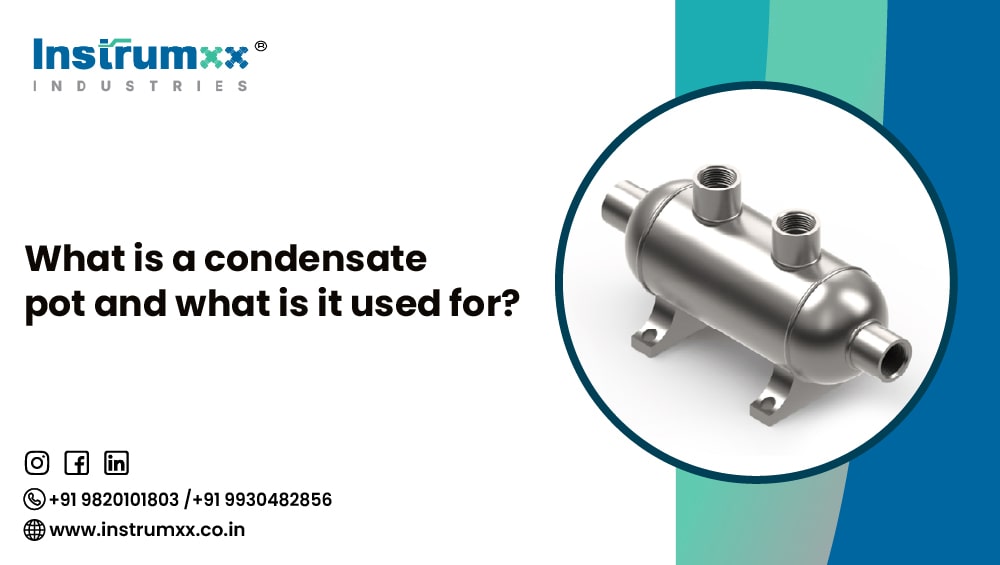
In industrial instrumentation and operation systems, accuracy and safety are key factors that determine competence and safety. Among the many components used to secure true calculation and stable operation, the condensate pot plays a required but often overlooked role.
This regular but key device is used in steam and gas pipelines to collect condensate and block it from entering touchy instruments like pressure transmitters or gauges. Knowing what a condensate pot is, how it functions, and where it is used can help engineers and technicians maintain method genuineness and prolong instrument life.
Instrumxx Industries, through this article, will help you take a closer look at this device, its applications, and why selecting a trusted condensate pot manufacturer or condensate pot supplier makes all the difference.
What is a Condensate Pot?
A condensate pot, especially known as a seal pot or condensate chamber, is a small vessel installed in a pipeline workflow—typically in steam, vapour, or gas service. Its primary desire is to acquire and hold condensate (liquid formed from steam or vapour) so that it does not join the impulse line connected to a pressure transmitter or opposite instruments.
In steam service, the condensate pot ensures that both impulse lines foremost to a differential pressure transmitter contain consistent columns of liquid. This balance allows for correct differential pressure dimension and protects the instrument from direct exposure to high-temperature steam.
Design and Construction:
Condensate pots are usually created from durable items such as
- Carbon steel
- Stainless steel (SS 304, SS 316)
They have the following properties:
- Cylindrical or tubular in shape
- Threaded or flanged closure contacts
- Simple installation
A reputable condensate pot manufacturer designs these vessels to handle high pressure and temperature while preventing corrosion or leakage.
Working Principle of a Condensate Pot
The working of a condensate pot is centred on an ordinary conception—separation of condensate from vapour.
When steam or gas flows through the pipeline, a portion of it condenses into liquid due to temperature drop or system design. If this condensate enters the instrument line, it can cause inaccurate readings or uniform damage to responsive components.
The condensate pot traps this liquid at a low point in the line. The vapour continues to flow freely while the condensate collects inside the pot. This creates a liquid seal that isolates the instrument from direct steam or gas links, maintaining procedure integrity and stable estimation requirements.
In differential pressure dimension setups, identical condensate pots are installed on both the high-pressure and low-pressure impulse lines. This ensures that both sides maintain the same hydrostatic head, upgrading the accuracy of pressure readings.
Uses of Condensate Pot
-
Steam Size Systems
Condensate pots are used in steam lines to trap condensate before it reaches pressure transmitters, ensuring perfect and stable readings.
-
Differential Pressure Transmitters
Installed in impulse lines connected to transmitters, condensate pots maintain balanced liquid phases, which are notable for precise differential pressure calculations.
-
Gas and Vapor Pipelines
In gas service, condensate pots gain moisture or oil that condenses during flow, preventing contamination of instruments and control systems.
-
Boiler and Capacity Plants
Ability generation plants use condensate pots substantially to protect pressure measuring devices from high-temperature steam.
-
Petrochemical and Refinery Units
In oil and gas refineries, condensate pots are necessary for maintaining safe and perfect pressure control in-depth operation loops.
-
Chemical and Fertilizer Industries
These industries rely on condensate pots to maintain clear and precise readings in steam-driven or vapour-phase systems.
Given these diverse applications, choosing the right condensate pot supplier is critical to validate
- Compatibility
- Durability
- Performance
Types of Condensate Pots
Condensate pots are accessible in various configurations depending on workflow conditions and space availability. Informal types include:
-
Horizontal Condensate Pot:
Installed horizontally, these pots are appropriate for systems with limited vertical space.
-
Vertical Condensate Pot:
Mounted vertically, these are used when gravity-profited drainage is needed.
-
Custom or Multi-Port Pots:
Created by specialised condensate pot manufacturers for unique procedure layouts or multi-instrument bonds.
A separate type is constructed for definite installation obstacles and tested to withstand high pressures and temperatures.
Advantages of Using Condensate Pots
The uses and good outcomes of condensate pots make them indispensable in any steam or gas instrumentation line. Below are their major advantages:
-
Security of Instruments
The primary intent of a condensate pot is to restrict high-temperature steam or gases from directly entering reactive measuring instruments like transmitters, gauges, and sensors.
-
Gauge Authenticity
By maintaining just liquid columns in impulse lines, condensate pots help achieve stable and identified pressure readings, predominantly in differential setups.
-
Operation Safety
Condensate pots reduce the risk of instrument damage and minimise capacity hazards caused by high-pressure steam publicity.
-
Prevention of Contamination
In gas or vapour systems, the pot traps impurities and moisture, preventing them from entering and clogging the instrumentation lines.
-
Extended Equipment Life
Protecting instruments from thermal shock and pressure fluctuations elevates their lifespan and reduces maintenance frequency.
-
Relaxation of Maintenance
Properly designed pots attach drain and vent bonds that simplify periodic cleaning and inspection.
These upsides highlight the importance of choosing a reliable condensate pot supplier who can guarantee high-quality substances and perfect manufacturing.
Material and Quality Standards
The performance of a condensate pot largely depends on its construction material and obedience to quality standards. Commonly used matter insert:
- Stainless Steel – Ideal for corrosive and high-temperature environments.
- Carbon Steel – Practical and extensively used for normal industrial applications.
- Alloy Steel / Chrome Molybdenum Steel – Appropriate for intense pressure and temperature limitations.
Supreme condensate pot manufacturers validate that every single pot undergoes hydrostatic testing, radiographic examination, and visual inspection. They go beyond complying with global standards such as ASME Module VIII, ANSI, and IBR (Indian Boiler Regulations).
Choosing the Proper Condensate Pot Supplier in India
India’s industrial landscape demands equipment that can withstand hard environments while meeting global standards.
Here’s what to look for when selecting a supplier:
- Manufacturing Certification – Certify that the supplier follows ASME, IBR, and ISO standards.
- Material Traceability – The supplier should provide mill test certificates (MTCs) for material verification.
- Customisation Options – Great suppliers offer design modifications based on connection size, volume, or material.
- After-Sales Support – Technical aid and on-site backup help maintain long-term rightness.
- Experience and Reputation – Choose a condensate pot supplier with a proven track record across industries like oil & gas, strength, and petrochemicals.
Why Make a Decision with a Reliable Condensate Pot Manufacturer
Working with an experienced condensate pot manufacturer ensures that every part is created for durability, validity, and acceptance. A professional manufacturer uses high-status elements, developed welding techniques, and modern inspection tools to guarantee leak-proof and pressure-resistant designs.
Moreover, reliable manufacturers offer complete documentation, including test certificates, dimensional reports, and quality reassurance approaches (QAPs), delivering complete users with transparency and trust.
Main point
A condensate pot may seem like a small component; on the other hand, its role in maintaining the safety and legitimacy of industrial systems is immense. From protecting instrumentation to ensuring specified pressure estimation, condensate pots form a critical part of steam and gas pipelines across industries.
Reliable condensate pot suppliers in India and manufacturers ensure that any unit meets international standards, delivering durability, streamlining, and safety.
In essence, a high-quality condensate pot manufacturer like Instrumxx Industries helps industries gain active high quality by offering products that unite reliability building with long-term authenticity — making them a small yet powerful part of any successful procedure approach.
Instrumxx Industries



Reach us
Products
Support
| +91 9820101803 | |
| +91 9930482856 |
| info@instrumxx.co.in sales@instrumxx.co.in |